Every job below is one we do ourselves across Lawrence.
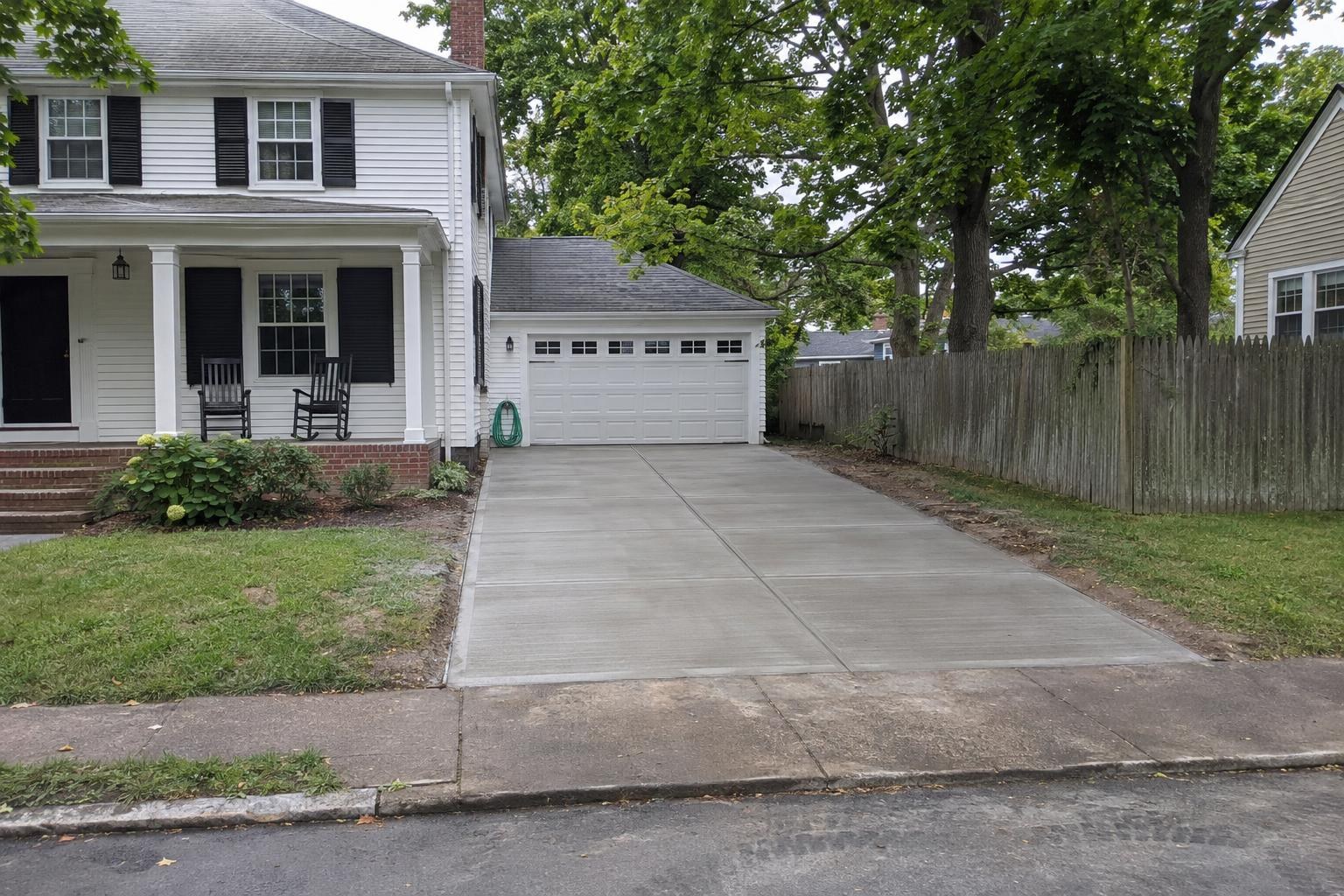
We form and pour driveways thick enough to carry a vehicle, usually a full 6 inches over compacted gravel instead of the 4 inches that's fine for a sidewalk. Rebar or wire mesh goes in depending on soil and slope, and we cut control joints the same day so the driveway cracks where we put the joint instead of down the middle.
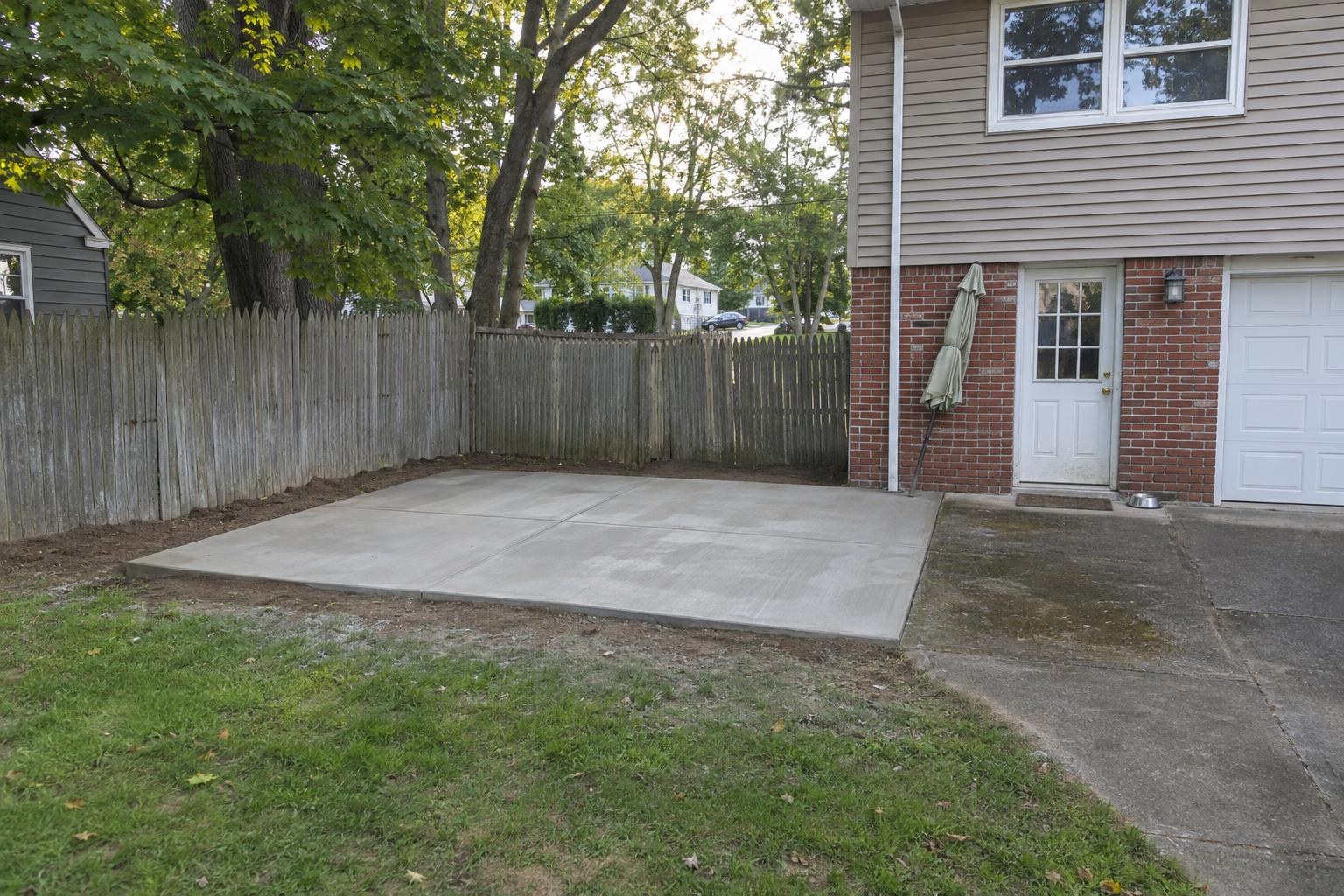
Patios get graded to pitch water away from the house, about a quarter inch of fall per foot. We'll do a broom finish for grip near pools and steps, or a stamped and colored finish if you want it to look like stone or slate.
Stamped concrete gets the look of pavers, slate or brick for less than the material cost of the real thing, and without joints where weeds and ants move in. We color and release it before it sets up, and seal it so the pattern holds its color through a few winters.
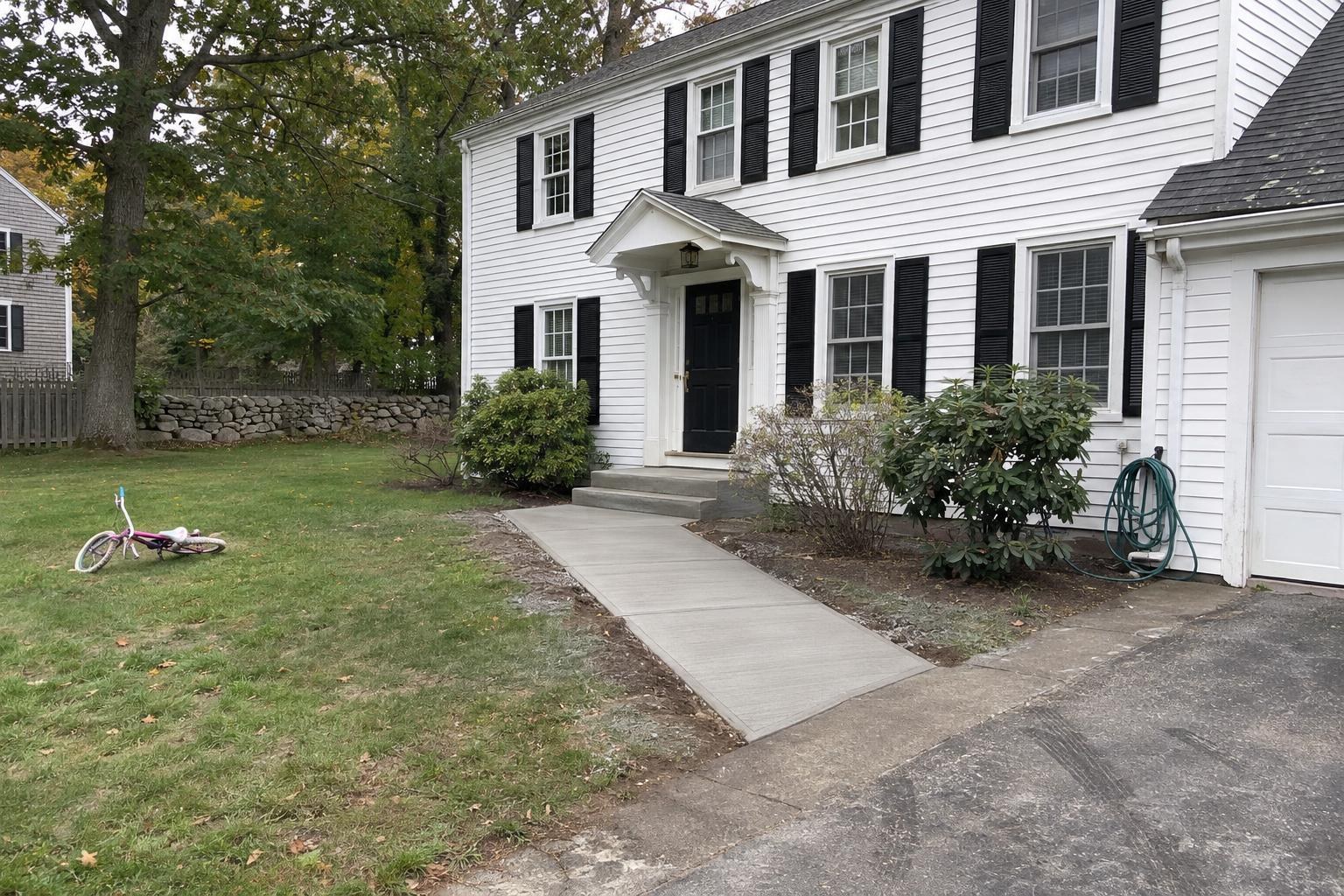
Walkways get a 4-inch slab over compacted base, sloped so they don't ice up in a sheet by the front door. We match expansion joints to existing concrete where a walkway ties into a driveway or porch slab.
Steps get built to code rise and run so they feel right underfoot, not just poured to whatever height was easiest. New steps tie into the house foundation properly instead of just butting concrete against it, which is usually why old stoops crack away from the wall.
We pour slabs for garages, sheds and additions, and footings for small foundations and frost walls. Footings go below the frost line, 48 inches around here, so the ground doesn't heave them come March.
Cracked, spalled or settled concrete usually comes down to what happened under the slab, not a bad mix. We'll route and fill hairline cracks, replace sections that are beyond patching, or mudjack a sunken slab back to grade instead of tearing it all out.
If a driveway or patio is scaling or pitted from years of deicing salt but still structurally sound, a bonded overlay can give it a fresh surface for less than a full replacement. Resurfacing over concrete with real structural cracks isn't recommended, that's a repair or a tear-out, not a skim coat.
Retaining walls hold back a slope or level out a yard, and the ones that fail usually had no drainage behind them. We put gravel backfill and a drain pipe behind every wall we build so water doesn't build up and push it over.
Pool decks need a broom or textured finish so the surface isn't slick when wet, and a slope away from the pool edge so splash-out doesn't pond. We also leave an isolation joint where the deck meets the pool shell, since the two move differently.
Four steps, and no surprises in any of them.
You tell us what you want doing, we look at what is actually there, and we ask the awkward questions early.
In writing, itemised, free. If something might add cost later we flag it now rather than at the end.
Same crew throughout. We cover your floors, keep the dust down and tidy up before we leave each day.
You point out anything you are not happy with and we fix it before the invoice, not after.
A few driveways, patios and repairs finished around Lawrence.
These are the towns where site visits and estimates are easiest to schedule.
Common questions once a concrete project is actually underway.
Describe the problem and we will tell you what it probably is. No obligation.